
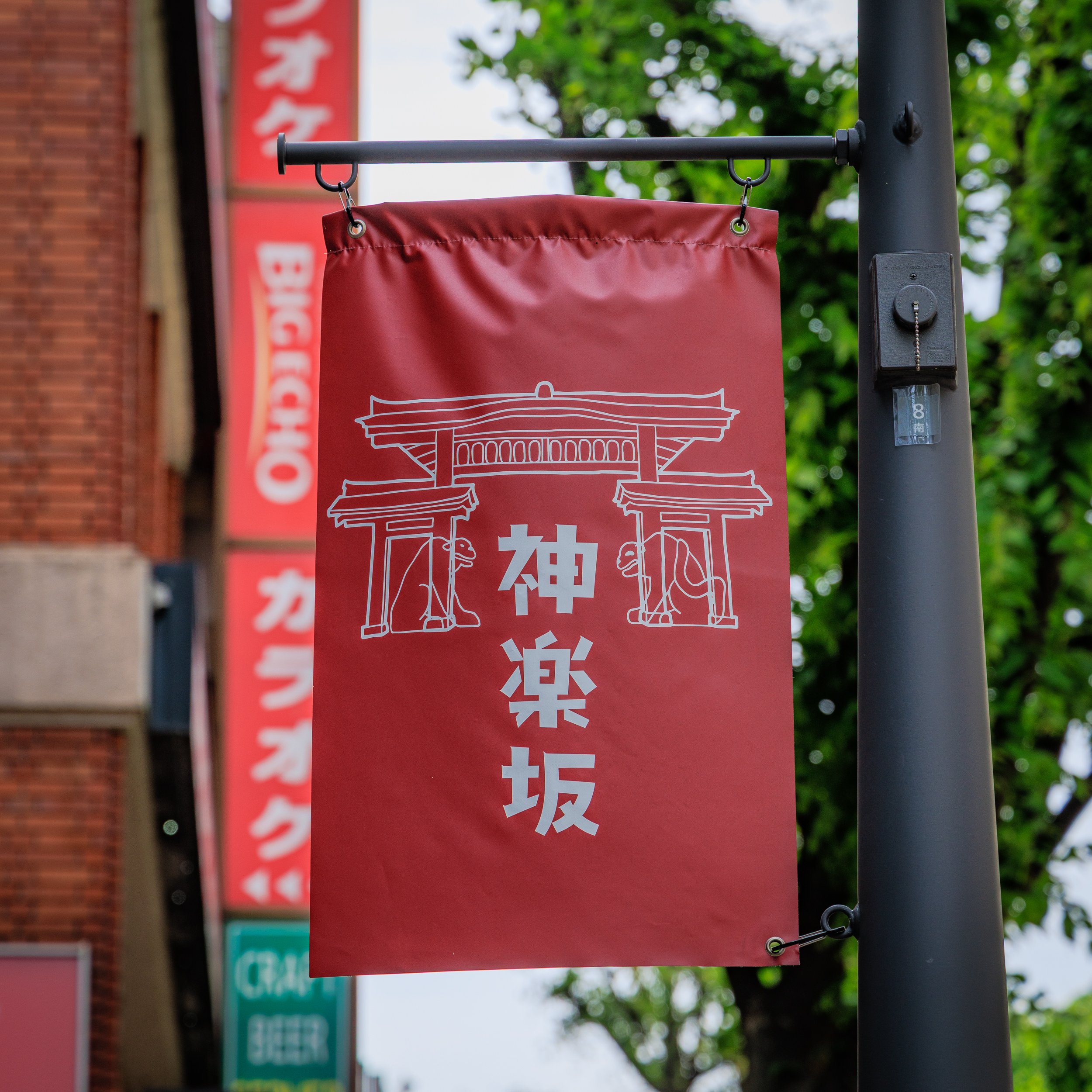
Kagurazaka , also known as Tokyo's “ Little Paris ” , due to the high concentration of French expats living in the neighborhood , the concentration of French language schools , the nearby Institut Français de Tokyo and the overall ambience that reminds of Paris’ neighborhoods .
The area surrounding Kagurazaka’s main street has an elegant feeling with French bakeries and restaurants , pottery shops and traditional Japanese items shops .
One of the possible origins of the Kagurazaka name is that , in ancient times when the Anahachi Mangu shrine would have it’s festivals , there would be Omikoshi ( Portable Shrines ) parades at the hill road and alongside there would also be the accompanying Kagura ( Shinto Music and Dance ) .
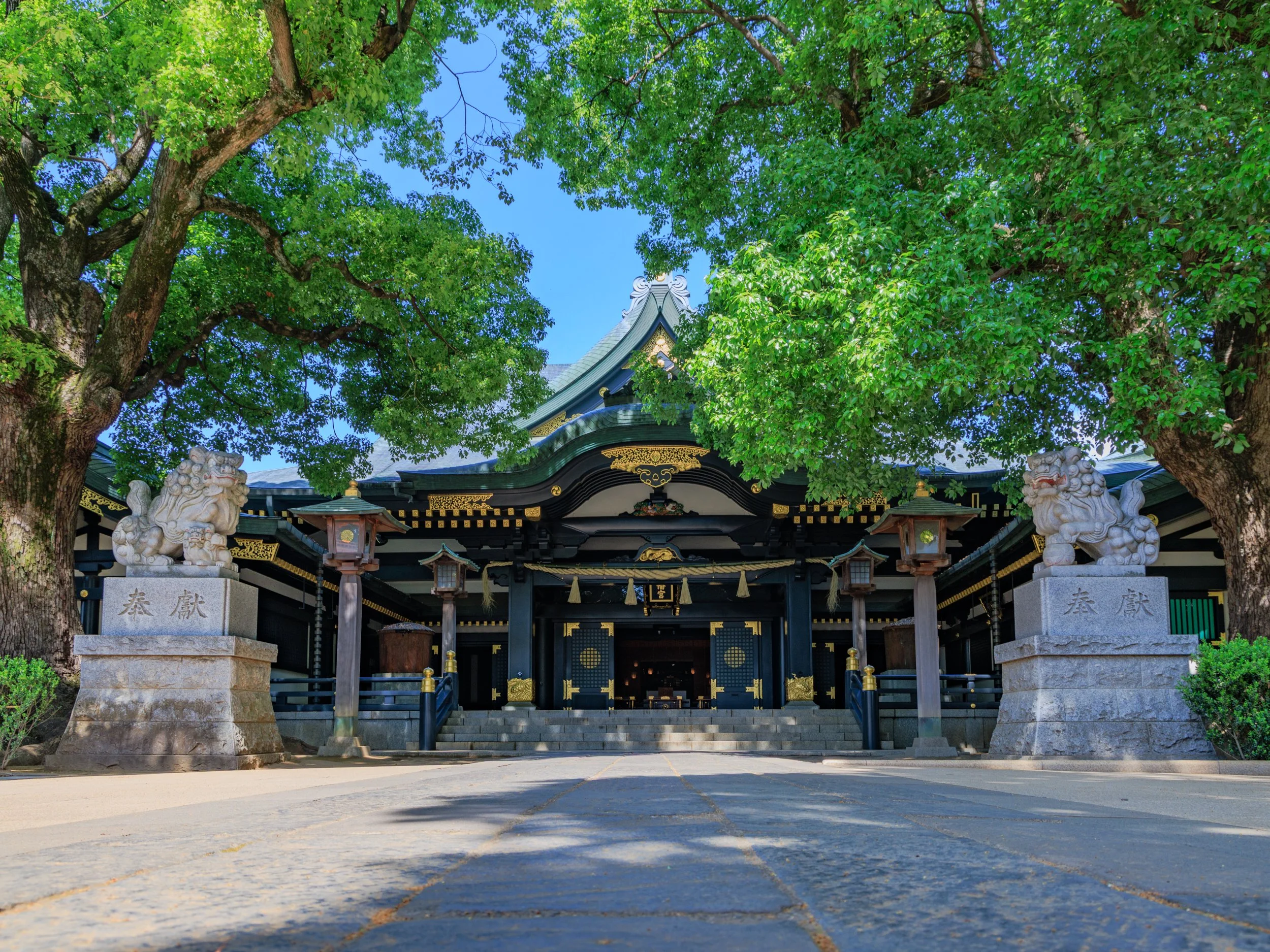
This hill road has existed since around 1637 . At this time Tokugawa Iemitsu ( the third Tokugawa Shogun ) would use it to regularly visit the Daimyo ( Feudal Lord ) and High ranking Government Official , Sakai Tadakyo’s home . During the Edo Period ( 1603 to 1867 ) there would be lots of Bushi ( Samurai ) residences around the Kagurazaka area . Also during the Edo Period , there would be lots of unauthorized brothels around this area . After the beginning of the Meiji Period ( 1868 to 1912 ) those were outlawed and the Kagurazaka area turned into a Hanamachi district ( Leisure District similar to Kyoto’s Gion District ) . At it heyday there were as much as 120 Ryotei ( High Class Traditional Restaurants with Entertaining Geisha ) and more than 700 Geisha living and working around this area . It is still possible to see some of the remaining Ryotei in the area’s hidden alleys .
One peculiarity about Kagurazaka’s main street is that it’s a one way street and the traffic direction changes according to the time of the day . From midnight until noon , the traffic flow is towards JR Iidabashi station . From noon until midnight the traffic flow is on the opposite direction , towards Akagi shrine and the Tokyo Metro Subway Kagurazaka station . The street is closed to traffic from 12:00 until 13:00 on weekdays and from 12:00 until 19:00 on Sundays and Holidays . There's an urban legend disseminated by taxi drivers about the reason for the street's one way traffic . It says that the late Japanese Prime Minister Kakuei Tanaka would use the street to commute from his house in Shirogane in the morning and in the early evening when returning from office .
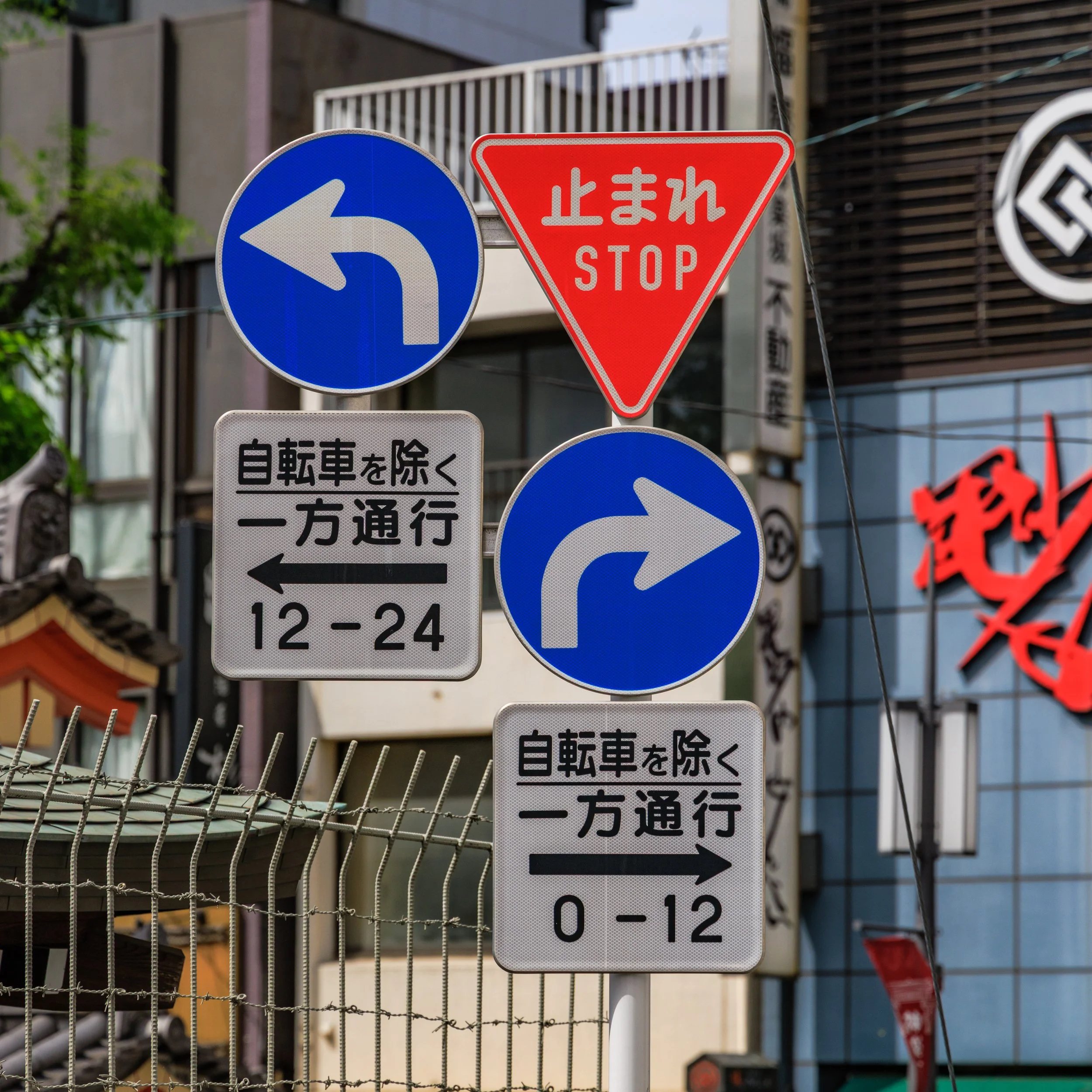
Kagurazaka Street Traffic Sign
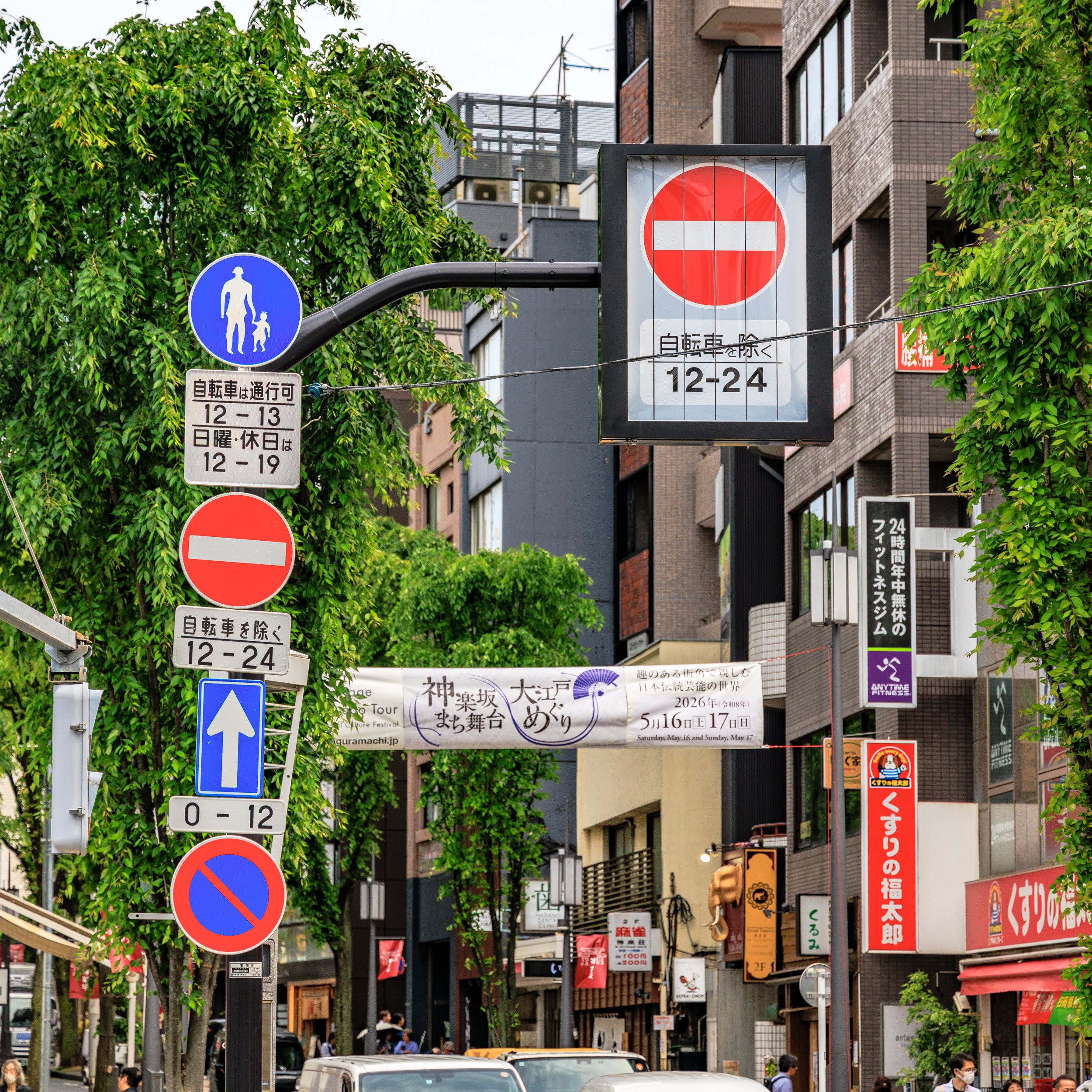
Kagurazaka Street Traffic Sign
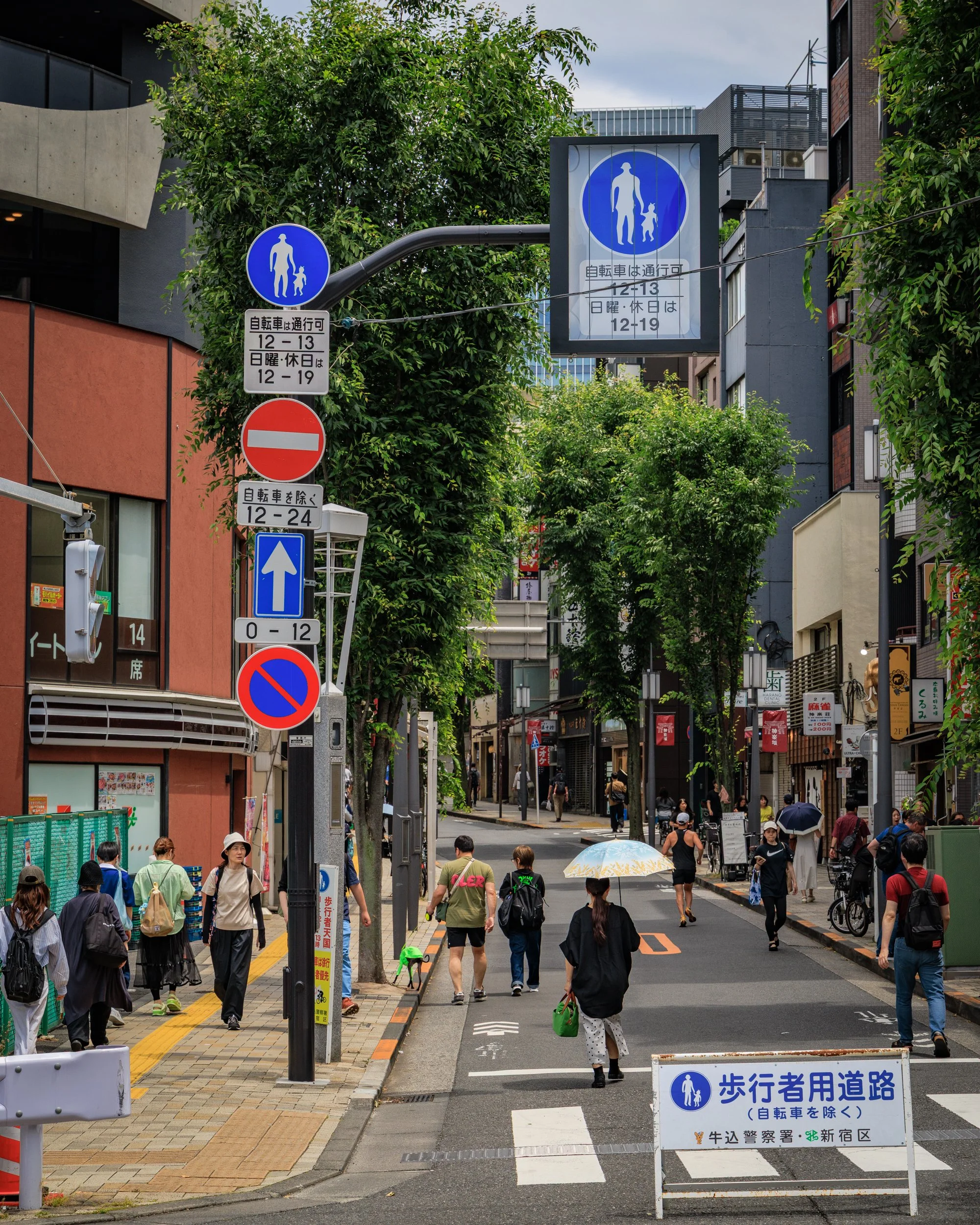
Kagurazaka Street Traffic Sign
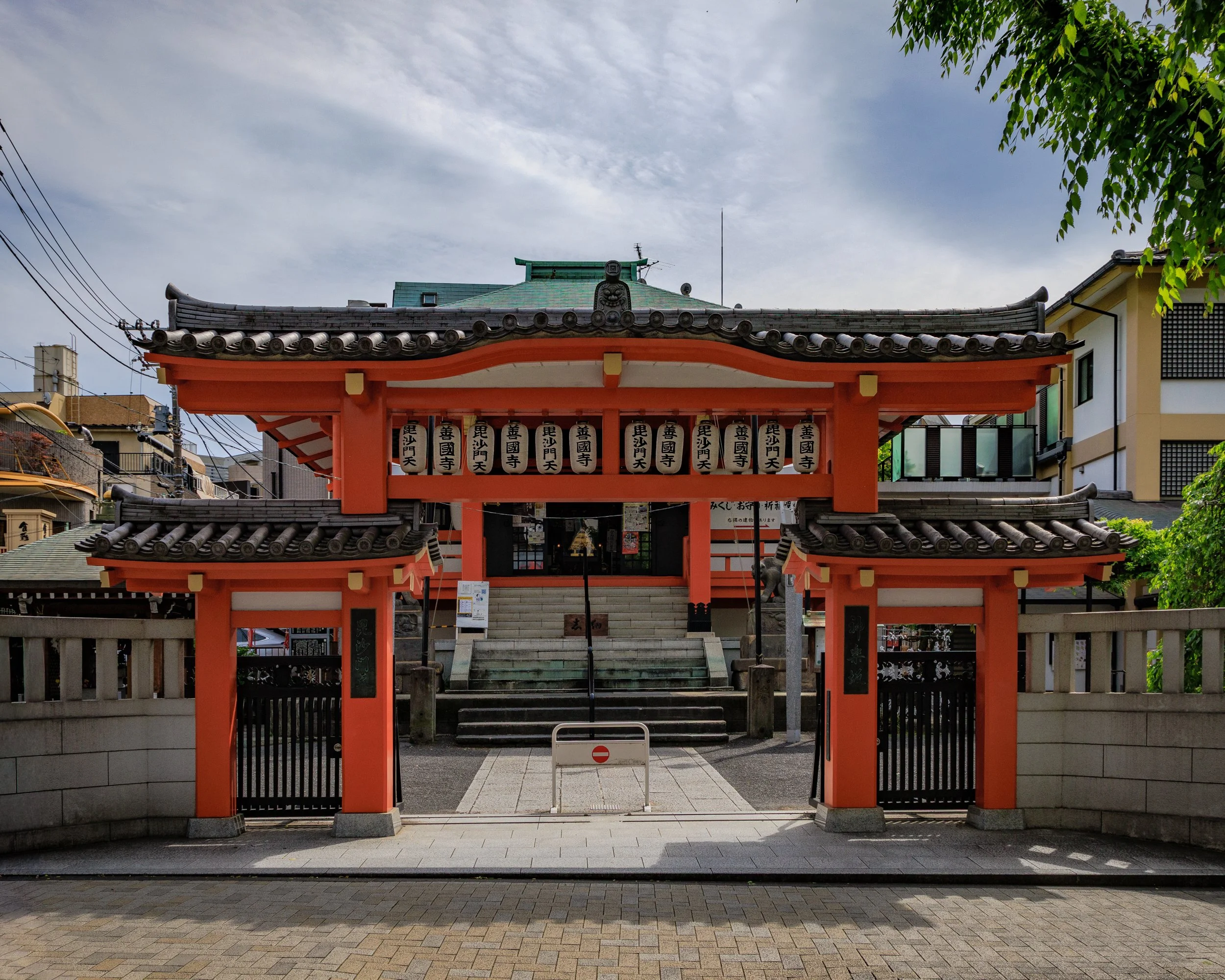
Along Kagurazaka street you’ll find Zenkokuji Temple , dedicated to the Bishamon deity .
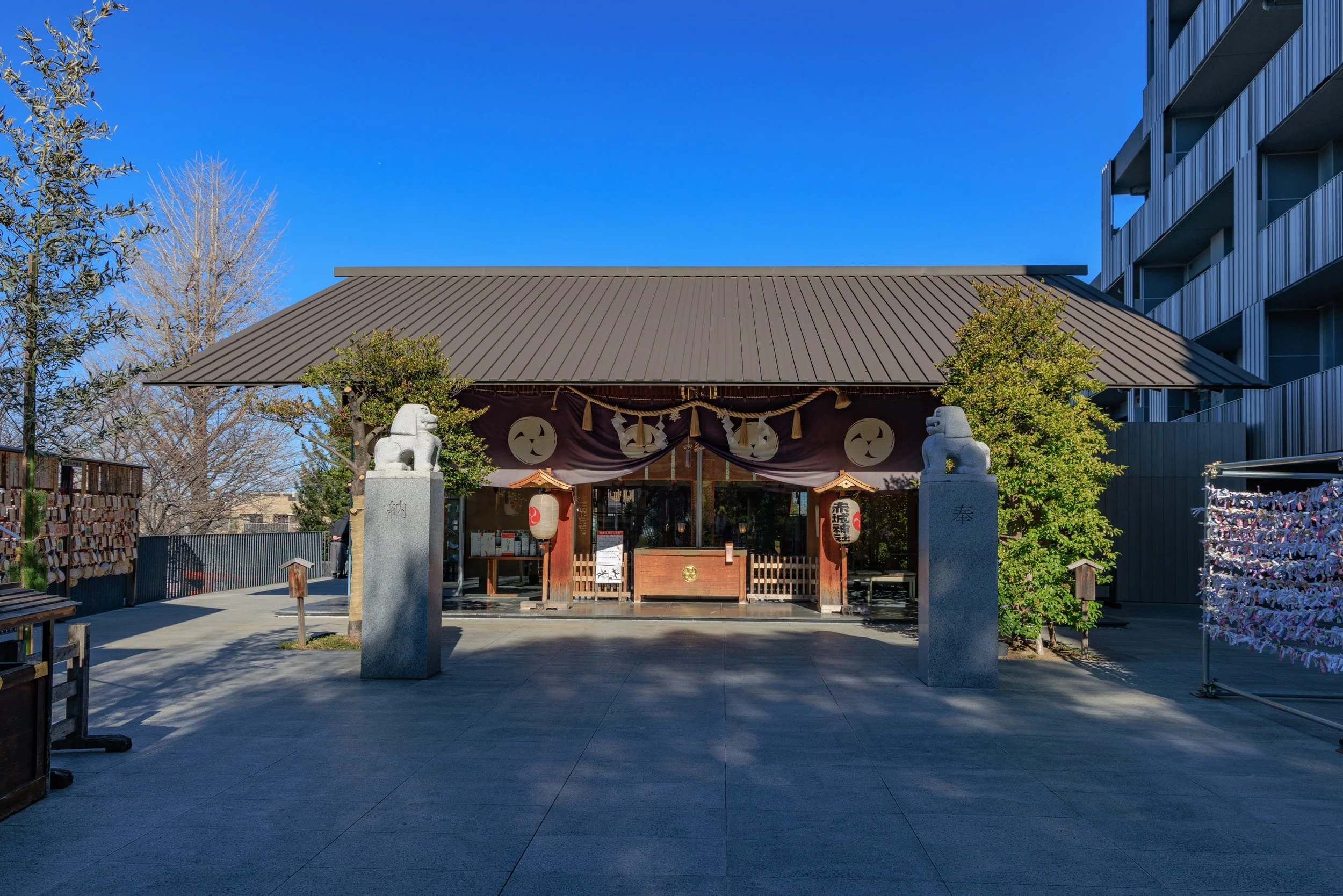
Akagi Myojin shrine has been located in the Kagurazaka neighborhood at least since the early Edo period .
The most popular hidden alleys are the Hyogo Yokocho and the Kakurenbo Yokocho . Both alleys have cobbled stones pavements . The Hyogo Yokocho alley is perpendicular to the Kagurazaka main street and it's itself a small hill alley .
Hyogo Yokocho Alley © OpenStreetMap contributors
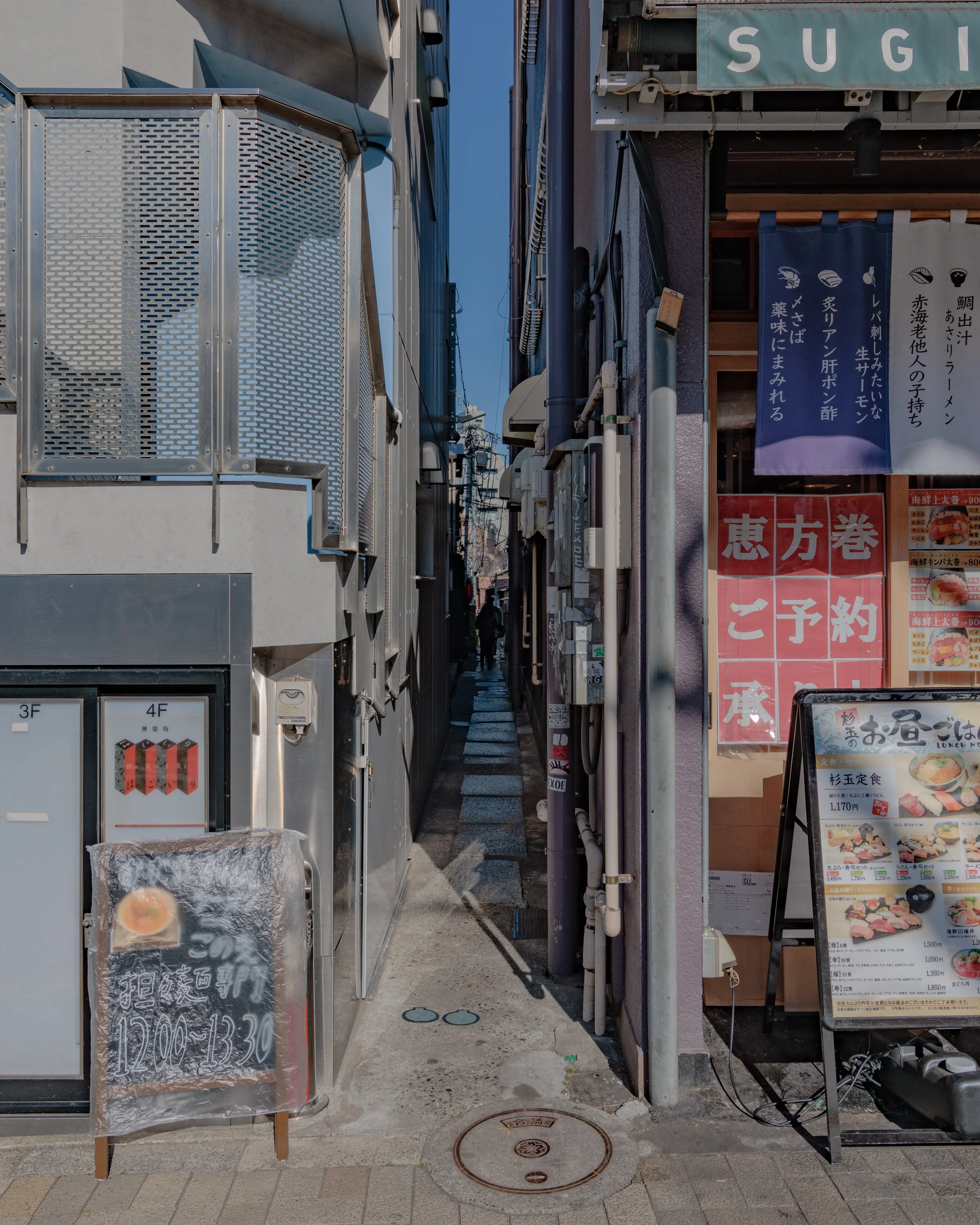
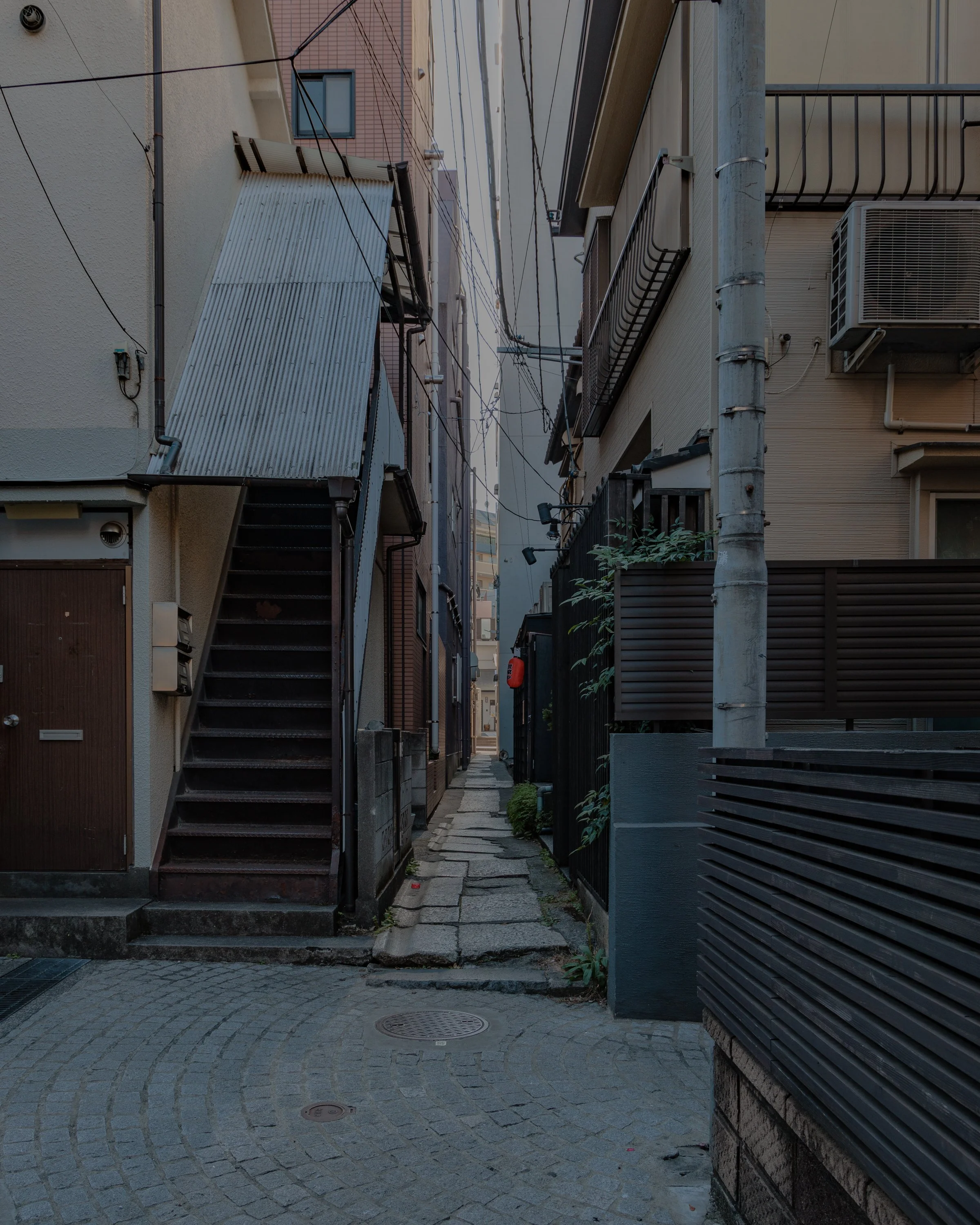
Hyogo Yokocho Alley Entrance View from Inside
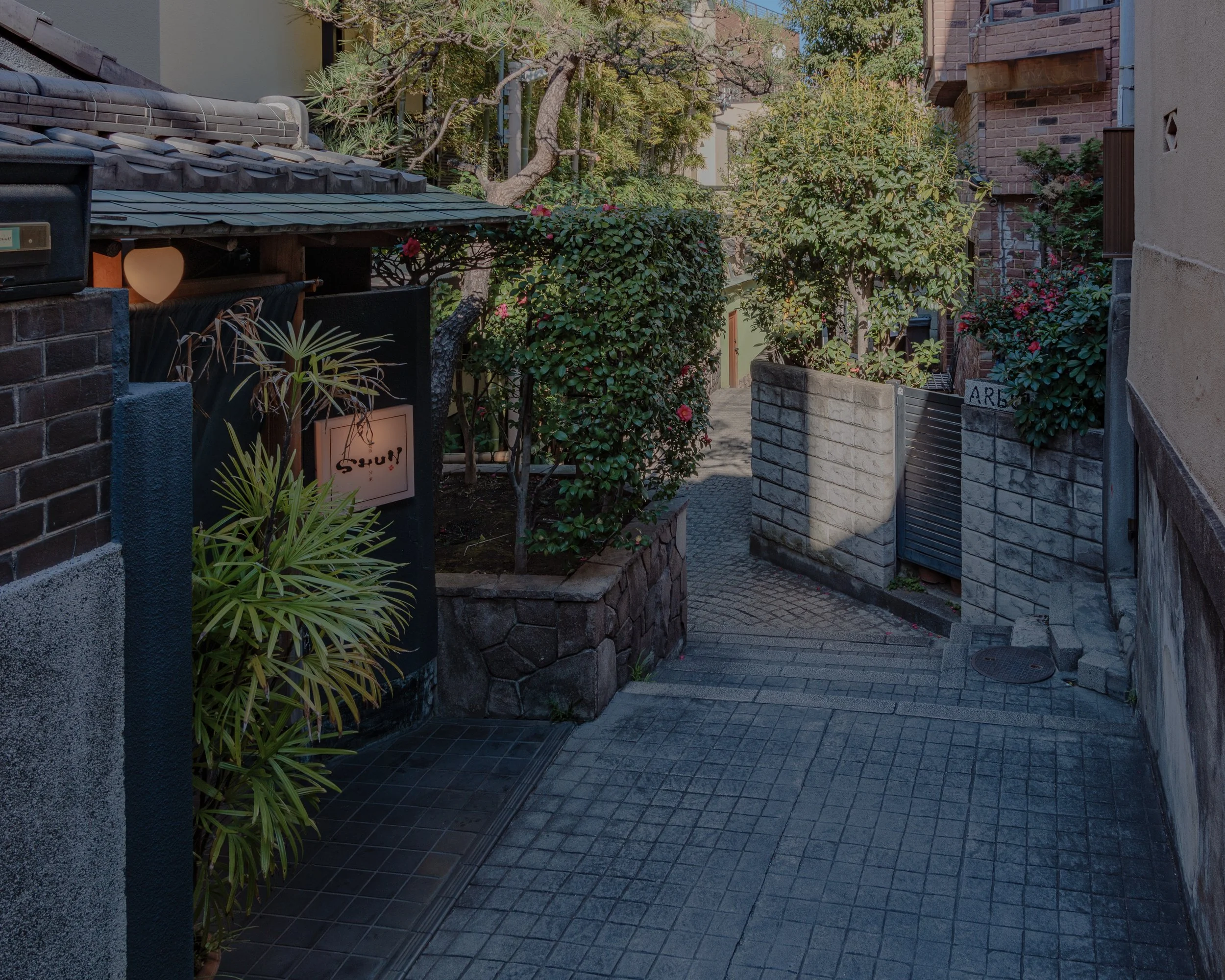
Hyogo Yokocho Alley
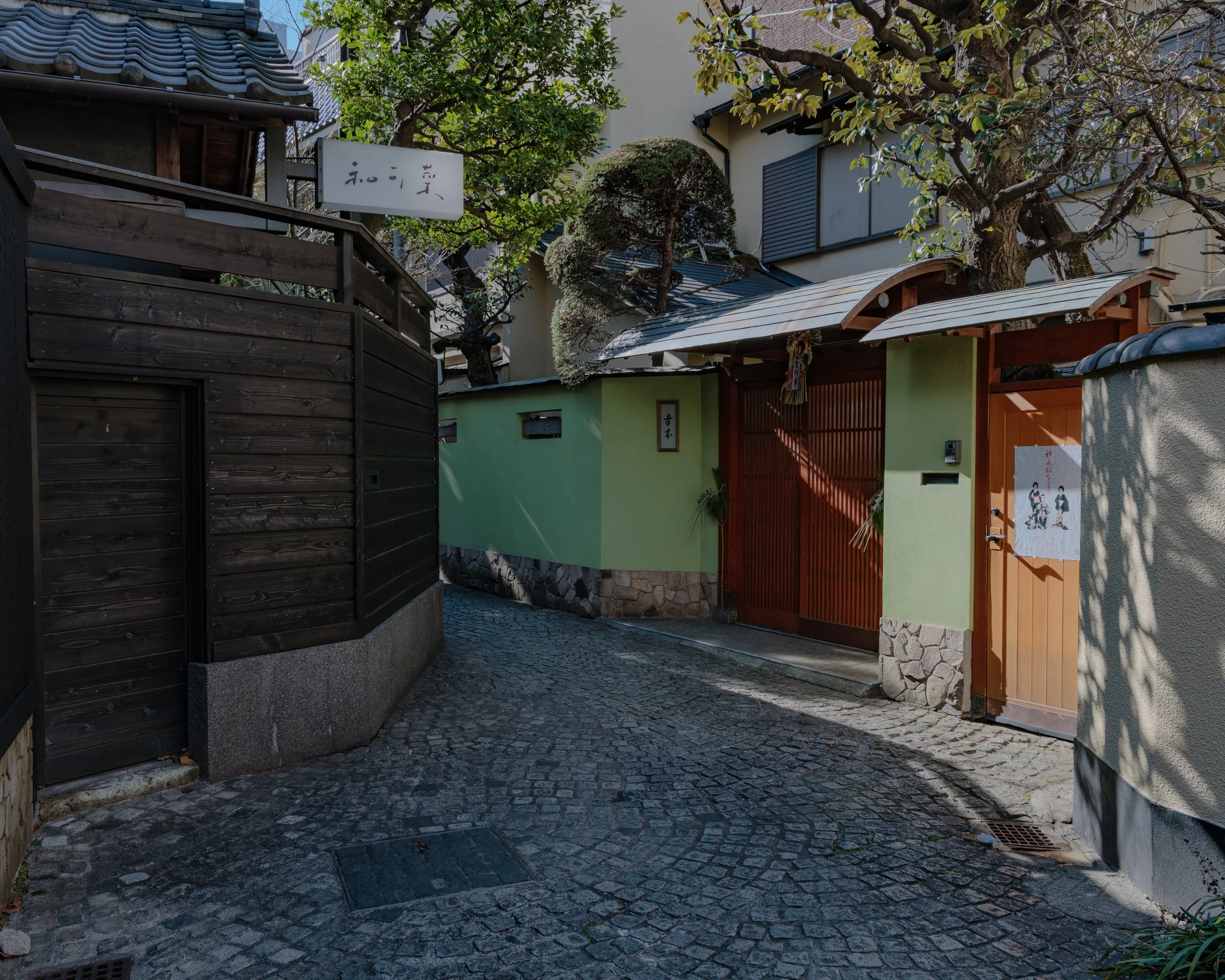
Hyogo Yokocho Alley
The Kakurenbo Yokocho alley is parallel to the Kagurazaka main street and sits on flat terrain .
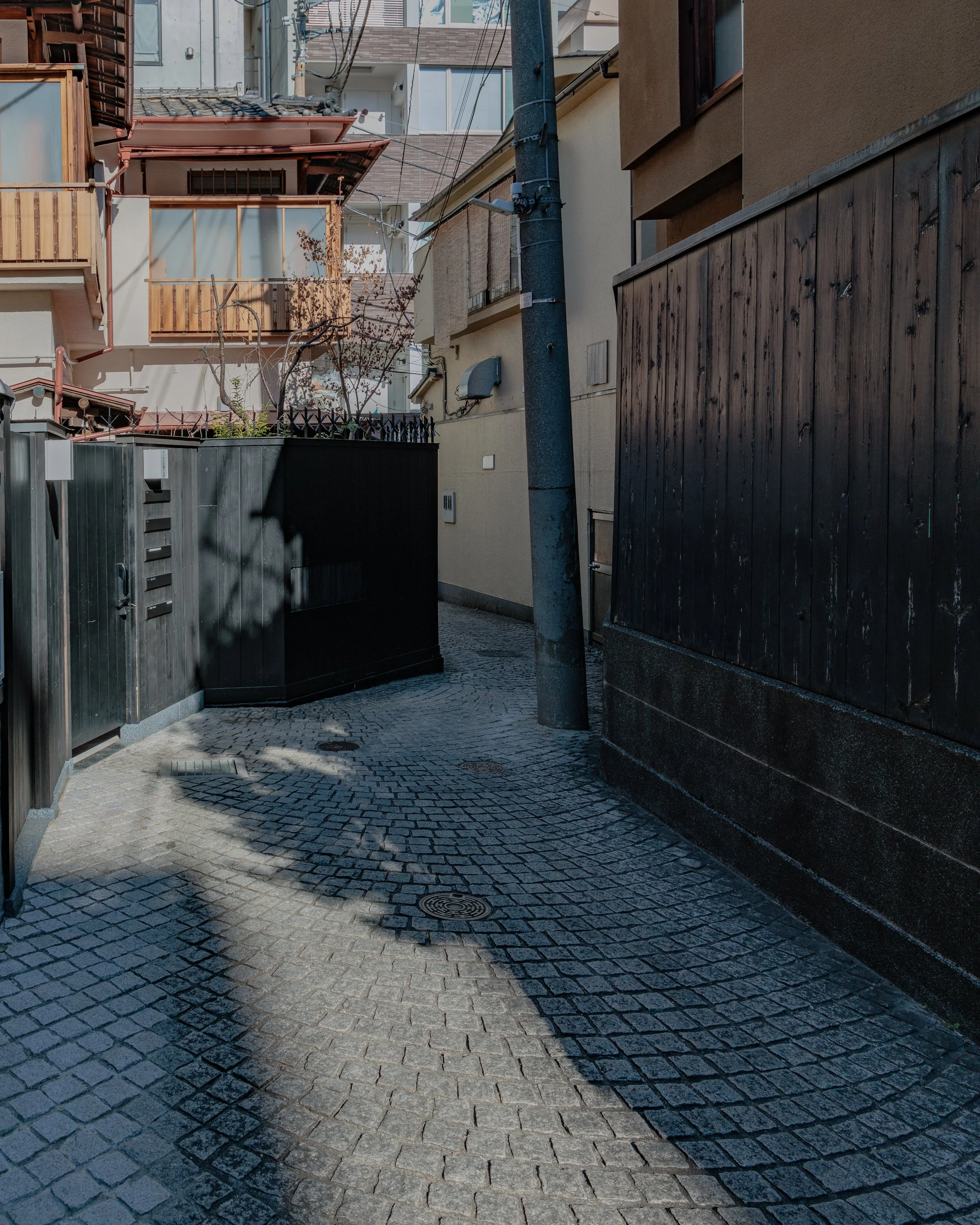
Kakurenbo Yokocho Alley
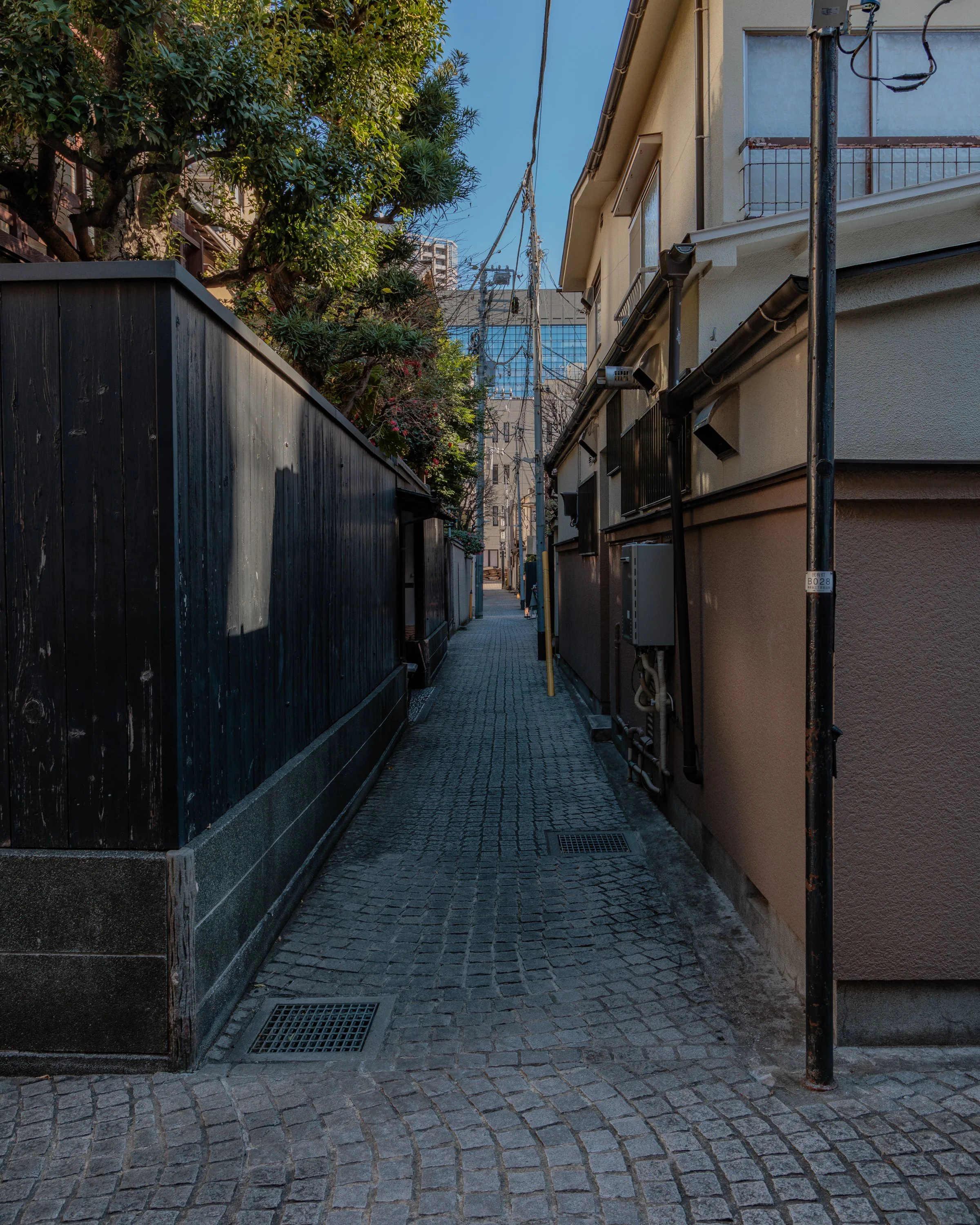
Kakurenbo Yokocho Aleey
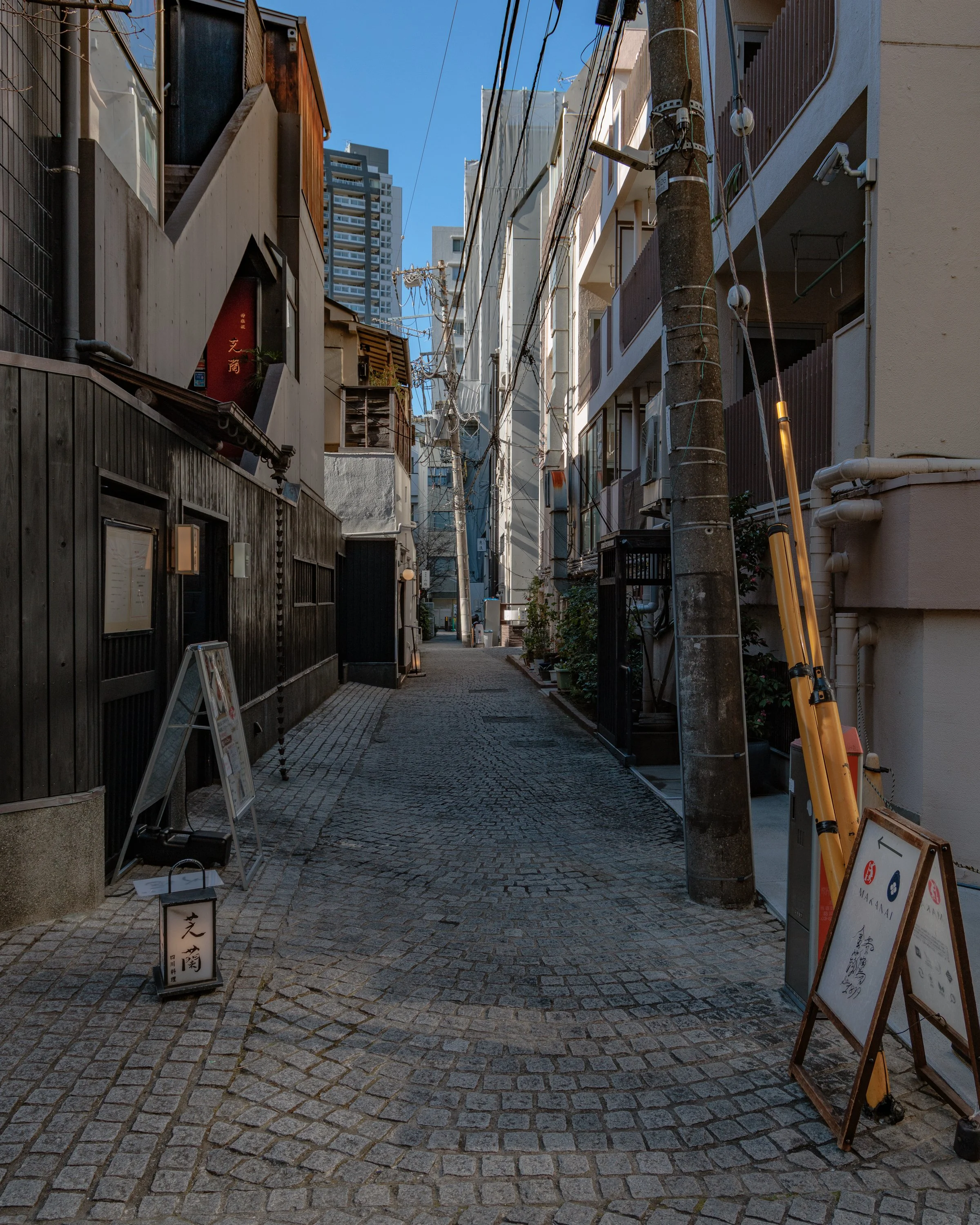
Kakurenbo Yokocho Alley
At Kakurenbo Yokocho , there are 3 cobbled stones that differ from the others , a heart shaped one and 2 with carvings , a star and a diamond .
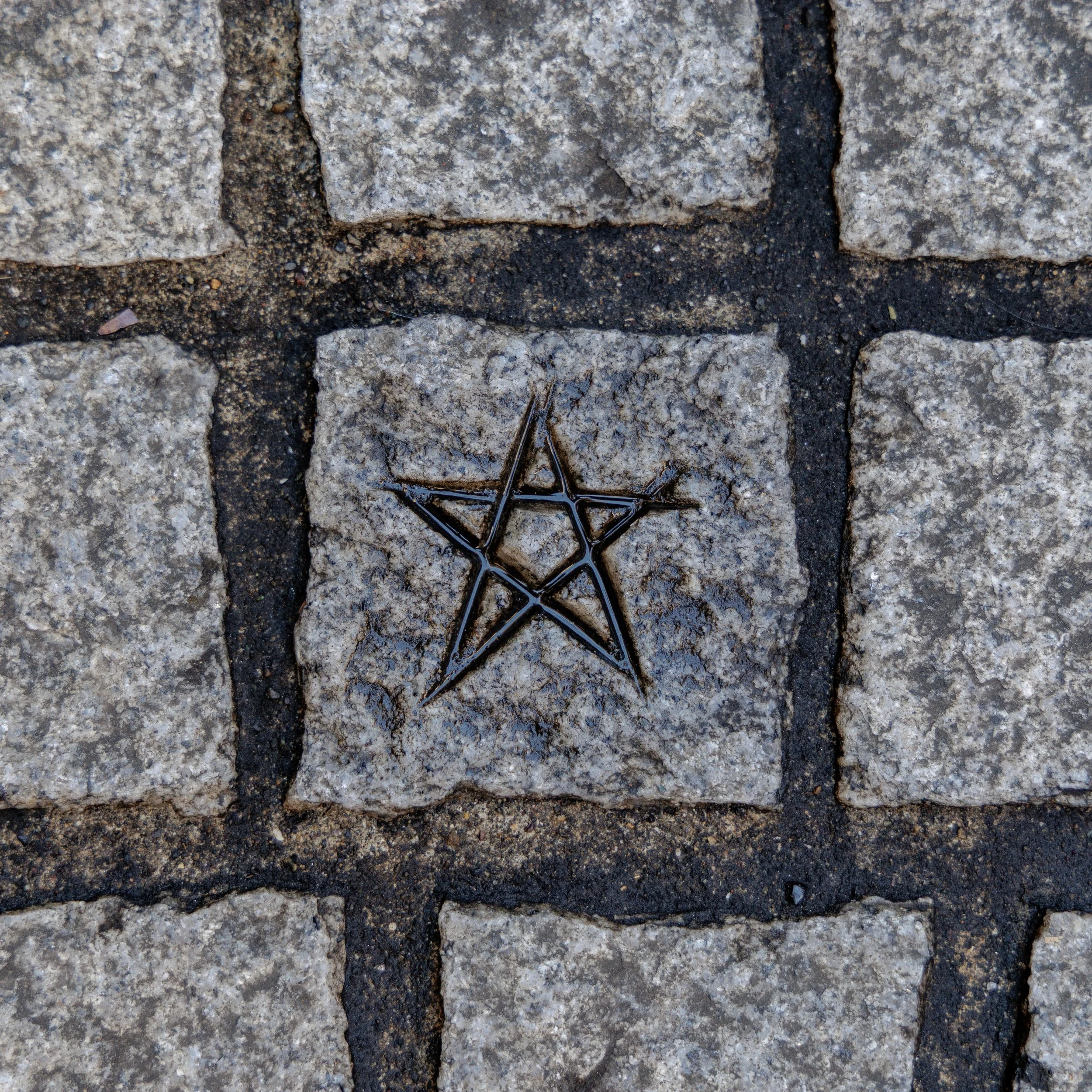
Star Shape Engraved Cobbled Stone
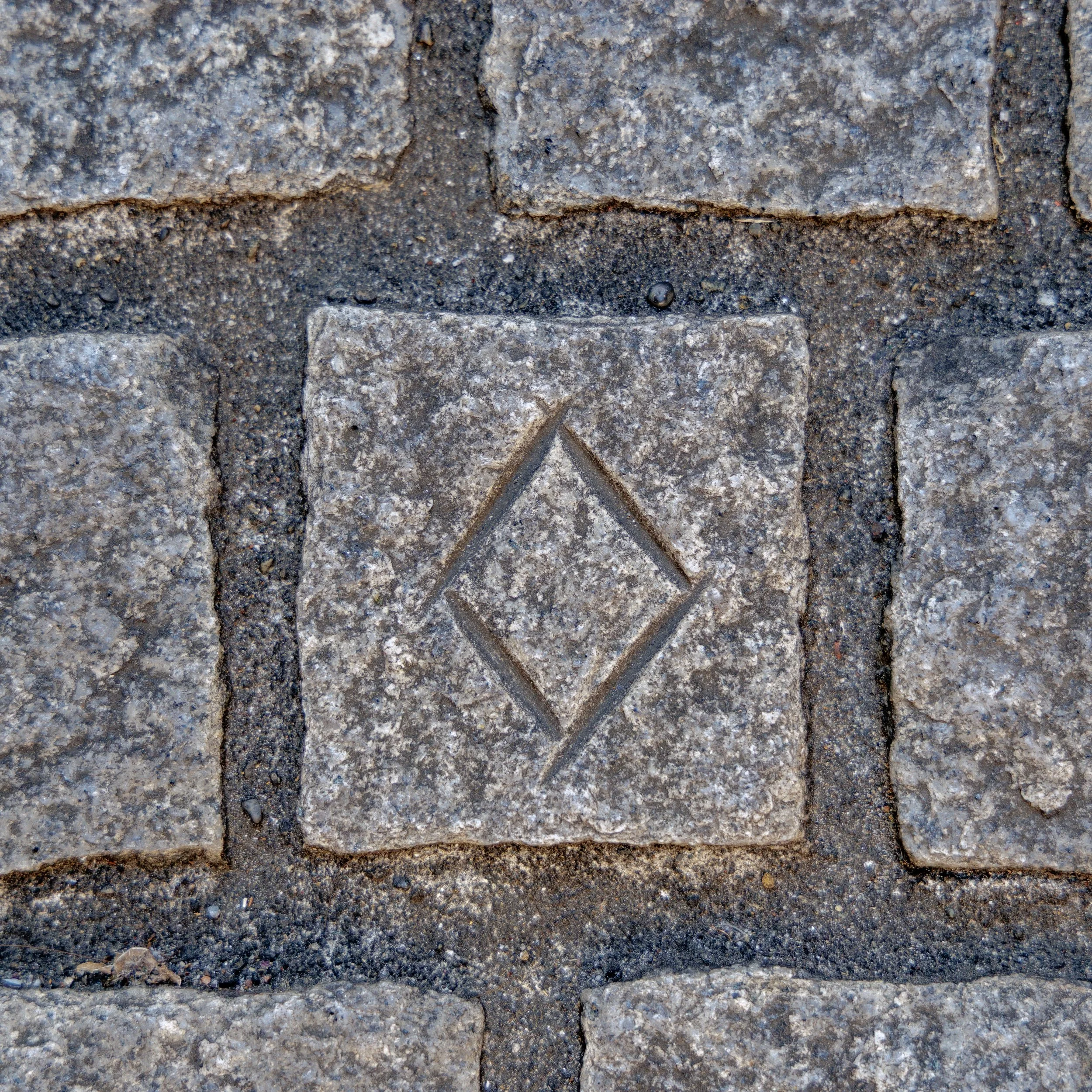
Diamond Shape Engraved Cobbled Stone
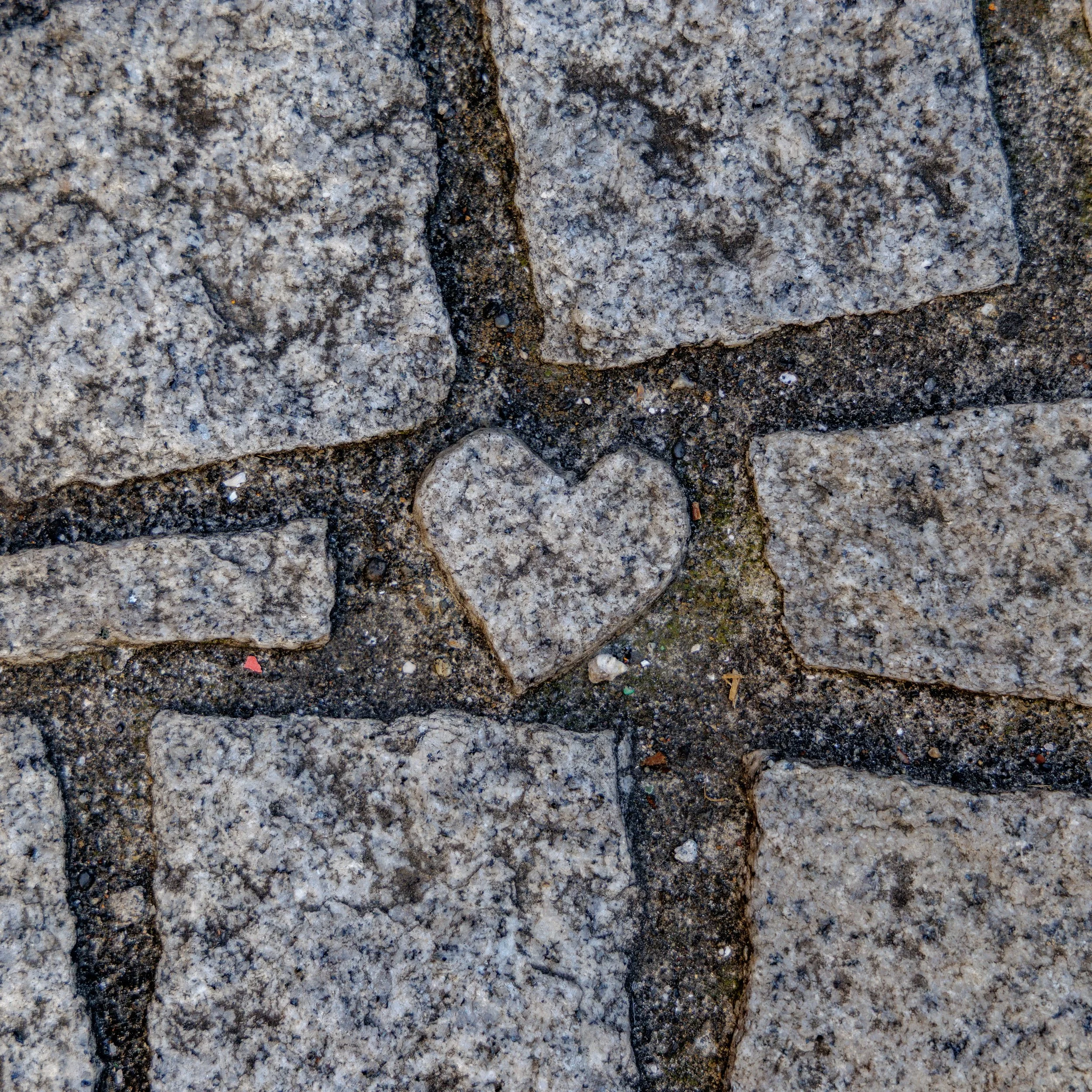
Heart Shaped Cobbled Stone